AI medical-imaging research pipeline

Alzheimer's Detection Research Pipeline

A reproducible PyTorch pipeline taking raw brain MRI files through preprocessing, training, and cloud staging to evaluation artifacts collaborators can audit.

Overview

Built through the Drew Summer Science Institute at Drew University, this repository moves from raw ADNI and Kaggle MRI files to reproducible preprocessing, EfficientNet-B0 training, Google Cloud staging, evaluation artifacts, and export-ready inference work.

The research question was practical as much as technical: can a compact imaging model distinguish healthy controls from patients on the Alzheimer’s continuum, while keeping the pipeline reproducible enough for collaborators to audit?

This is academic research, not a client product, and no clinical claim is made for it. It appears here because the engineering underneath is the transferable part — a documented data path, configuration-driven runs, GPU training staged on managed cloud infrastructure, and models exported behind an API. That is the same shape as any production machine-learning feature.

Metrics from the research are deliberately not reproduced on this site. They belong with the research write-up and its methodology, not in marketing copy.

Status
University research programme — Drew Summer Science Institute, Summer 2025
Built for
Research collaborators reproducing and auditing imaging experiments
Role
Research engineering, MRI data preparation, model training, evaluation reporting
Timeline
Summer 2025
Platforms
Google Cloud, Local GPU
Categories
AI & Research
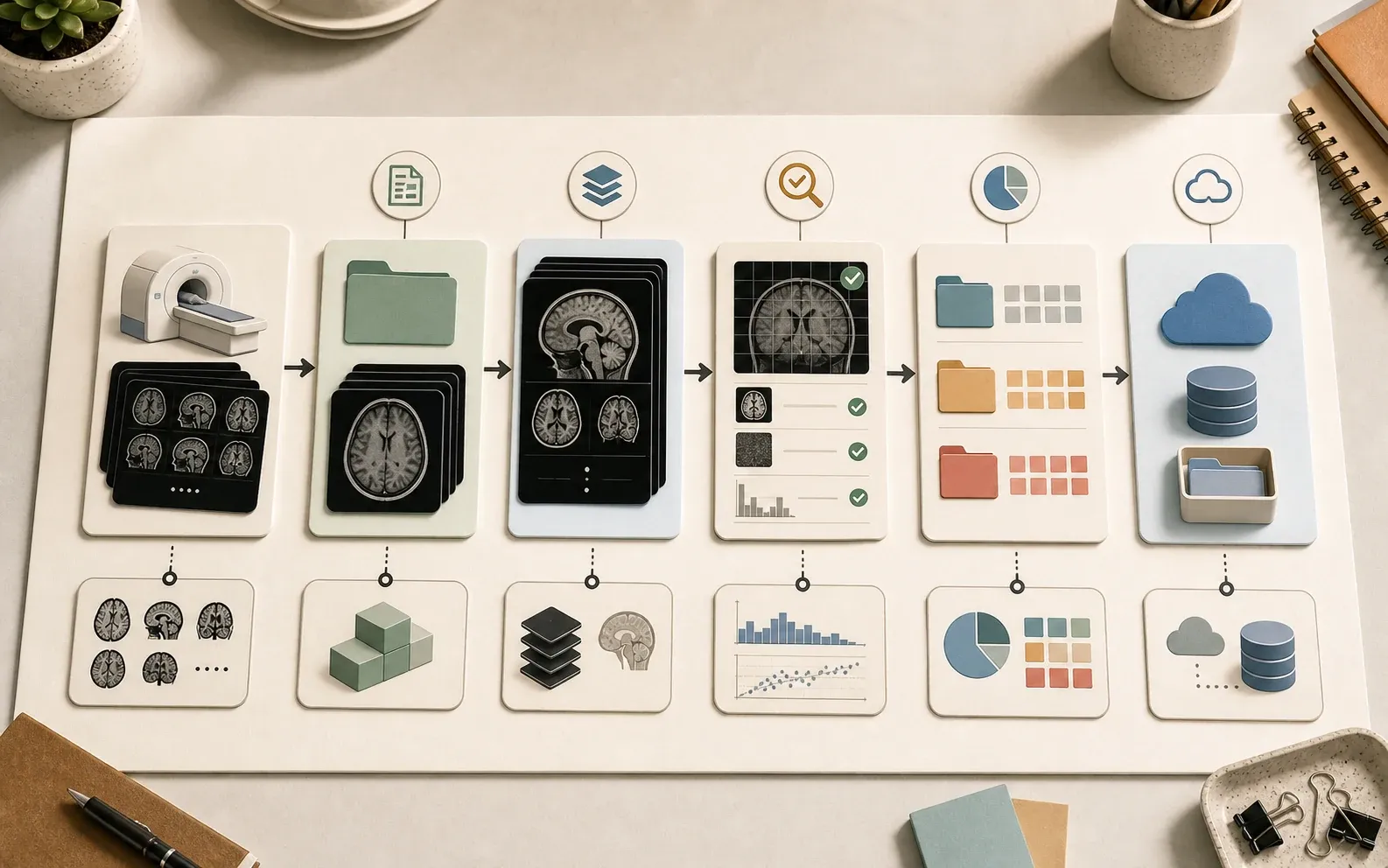
Visualisation of the Alzheimer's research MRI processing pipeline

What was built

Responsibilities and core features

Responsibilities

  • MRI conversion workflow for DICOM and NIfTI inputs
  • Preprocessing, quality checks, slice extraction, and stratified splits
  • PyTorch EfficientNet-B0 training with checkpointing and metric artifacts
  • Google Cloud Storage and Vertex AI staging for GPU training runs
  • Evaluation reporting and export paths for serving

Core features

  • Two-notebook workflow: an end-to-end prototype and a cleaner training and evaluation runner
  • DICOM and NIfTI conversion with PNG slice extraction and quality checks
  • Stratified 80/10/10 splits
  • EfficientNet-B0 training with AdamW and cosine learning-rate decay
  • Timestamped outputs, cloud checkpoints, and repeatable metrics
  • TorchScript and ONNX export examples with FastAPI serving

Engineering

Problems that came up, and what fixed them

The specifics matter more than the feature list. This is what the work actually consisted of.

  1. Reproducibility as the actual deliverable

    The research question was as much practical as technical: keeping the pipeline reproducible enough for collaborators to audit. Python modules and YAML configs carry experiment setup, preprocessing, and run control, so a run can be repeated rather than described.

  2. Documenting the data path as carefully as the model

    Medical-imaging work becomes more credible when preprocessing, splits, and outputs are documented as carefully as model code. Conversion, quality checks, slice extraction, and stratified splits are each explicit steps with recorded outputs rather than ad-hoc preparation.

Technical architecture

  • Jupyter notebooks for an end-to-end prototype and a cleaner day-two training and evaluation runner
  • Python modules and YAML configs for reusable experiment setup, preprocessing, and run control
  • MRI conversion workflow for DICOM and NIfTI inputs, PNG slice extraction, quality checks, and stratified splits
  • PyTorch EfficientNet-B0 training with AdamW, cosine LR decay, checkpointing, and detailed metric artifacts
  • Google Cloud Storage and Vertex AI staging, with export examples for TorchScript, ONNX, and FastAPI serving

Technology stack

  • Python
  • PyTorch
  • Jupyter
  • scikit-learn
  • Google Cloud
  • Vertex AI
  • FastAPI

What it adds up to

  • An end-to-end path from raw MRI files to a trained classifier and evaluation artifacts
  • Timestamped, repeatable runs with cloud checkpoints
  • Export-ready inference paths through TorchScript, ONNX, and FastAPI

Related services

The work this project demonstrates

Custom Software

One system that matches your real process, instead of four tools and a spreadsheet holding the gaps together.

Keep reading
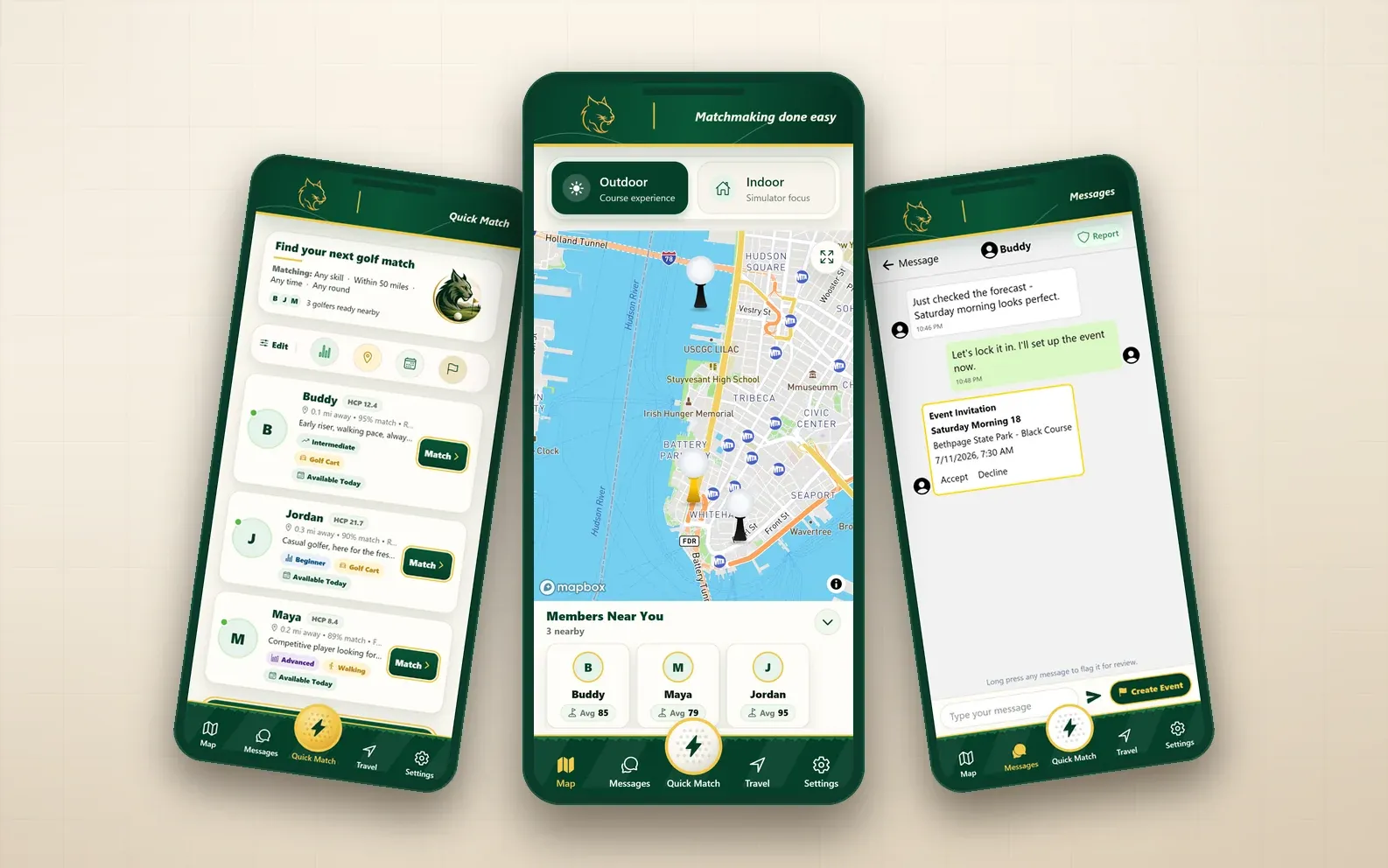
The GameLynx app shown on a phone, displaying its member discovery map

Cross-platform mobile appMobile Apps

GameLynx

A skill-based matchmaking app that pairs golfers with compatible playing partners nearby, then gets the round on the calendar.

In development — store listings in progress
  • React Native
  • Expo
  • TypeScript
  • React 19
  • +5 more
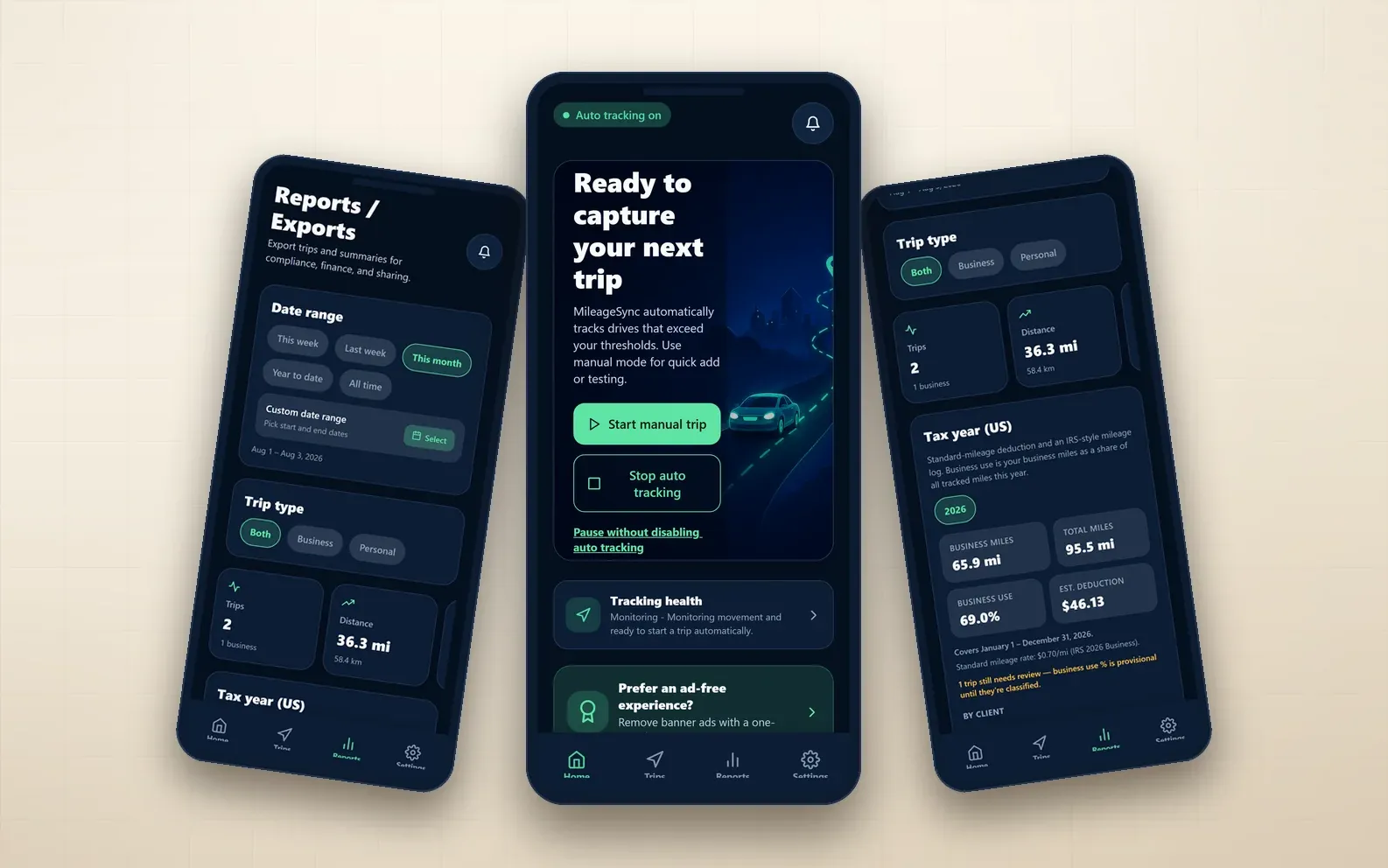
The MileageSync app shown on a phone, displaying its trip tracking home screen

Cross-platform mobile appMobile Apps

MileageSync

A hands-free mileage logger that detects drives in the background and turns them into IRS-ready deductions, with every GPS point kept on the device.

In development — store listings in progress

  • React Native
  • Expo
  • TypeScript
  • SQLite
  • +4 more

All case studies

Building something in this territory?

If any of this resembles the problem you are trying to solve, a discovery call is the fastest way to find out whether we can help.

Prefer email? Contact@DeviceBytes.com