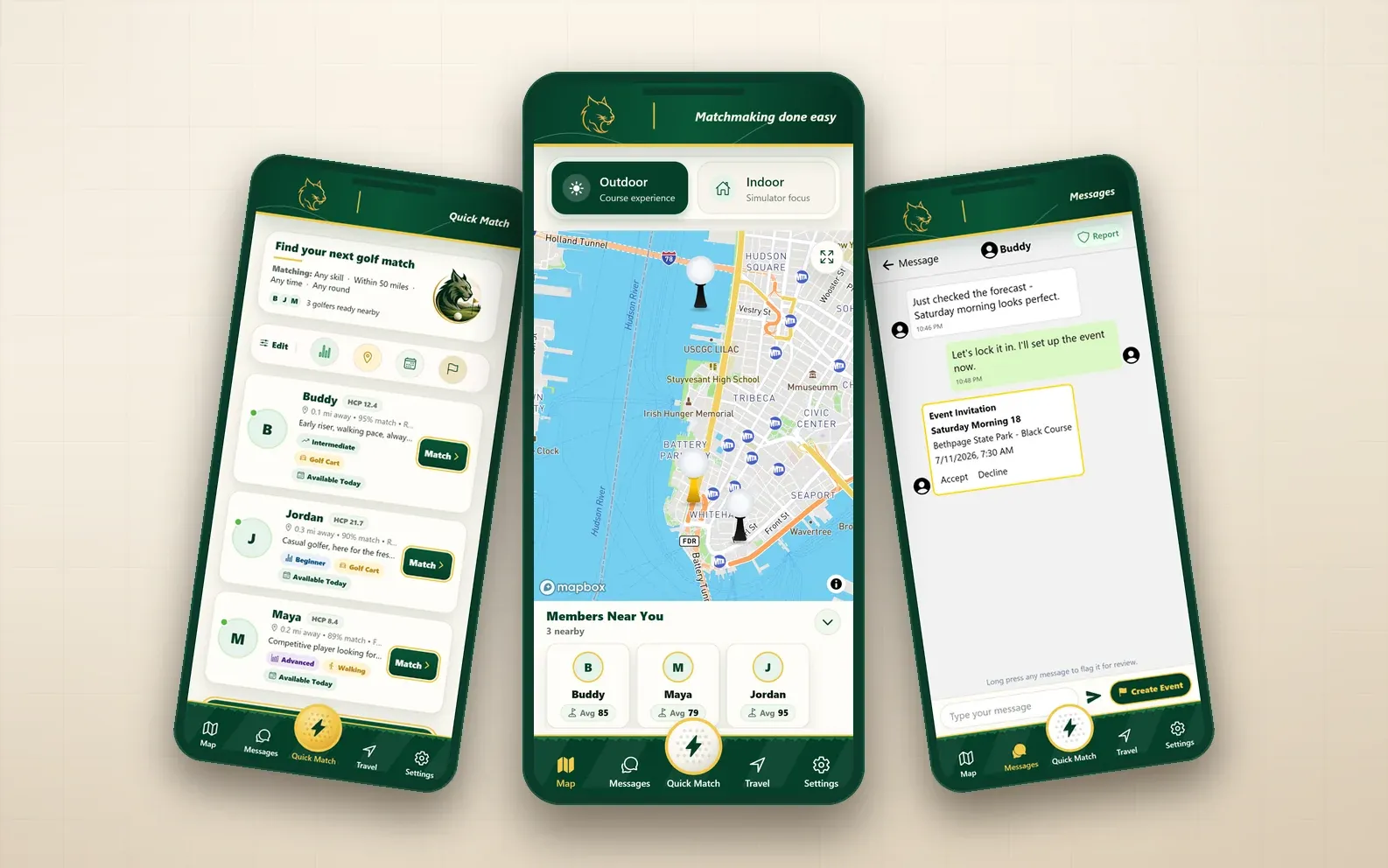
GameLynx
A skill-based matchmaking app that pairs golfers with compatible playing partners nearby, then gets the round on the calendar.
In development — store listings in progress
- React Native
- Expo
- TypeScript
- React 19
- +5 more
Cross-platform mobile app development
Cross-platform apps in React Native and Expo — including the background, permission, and store-review work that decides whether an app actually ships.
Building two native apps costs roughly twice as much and drifts apart within a year. But cross-platform has its own trap: the demo works, then the app meets a real phone. Background tasks get killed, battery optimisation throttles updates, a store reviewer rejects the build over a permission string, and the last ten percent takes longer than the first ninety.
One Expo codebase for iOS and Android, with the hard parts identified early rather than discovered at submission. Anything that has to survive the OS — background execution, permissions, offline state — gets built as testable logic separated from the device, so it can be proven against simulated failures instead of only against whatever your test phone happened to do.
Most of the cost in a mobile app is not the screens. It is background execution, permissions, offline behaviour, and store review — the parts that are invisible in a design file and unavoidable in production.
Two of the apps in our selected work are built on exactly that problem, and both case studies describe the specific bugs and how they were found.
From real projects
Each of these is drawn from a case study on this site, not from a hypothetical.
Case studies
A skill-based matchmaking app that pairs golfers with compatible playing partners nearby, then gets the round on the calendar.
In development — store listings in progress
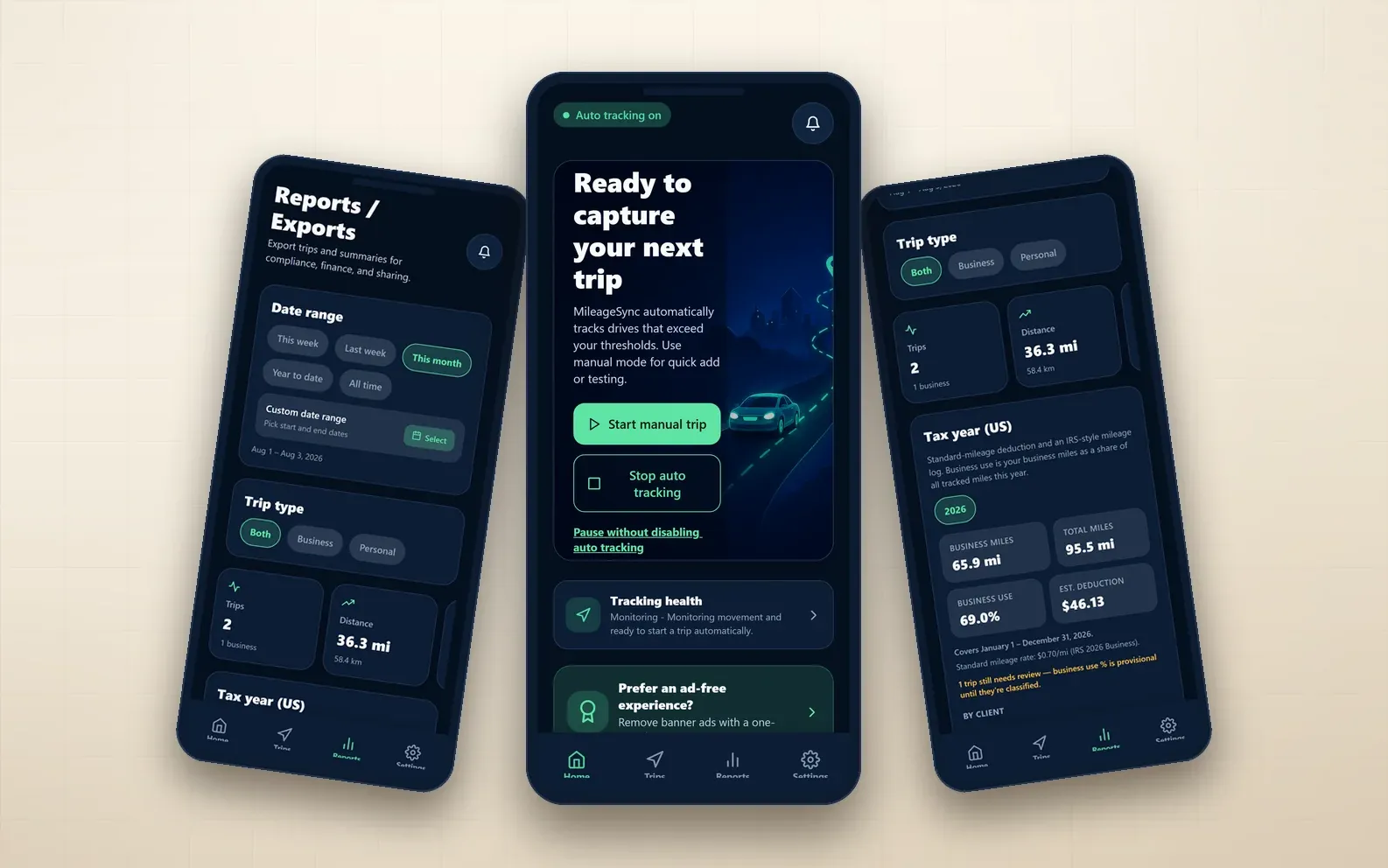
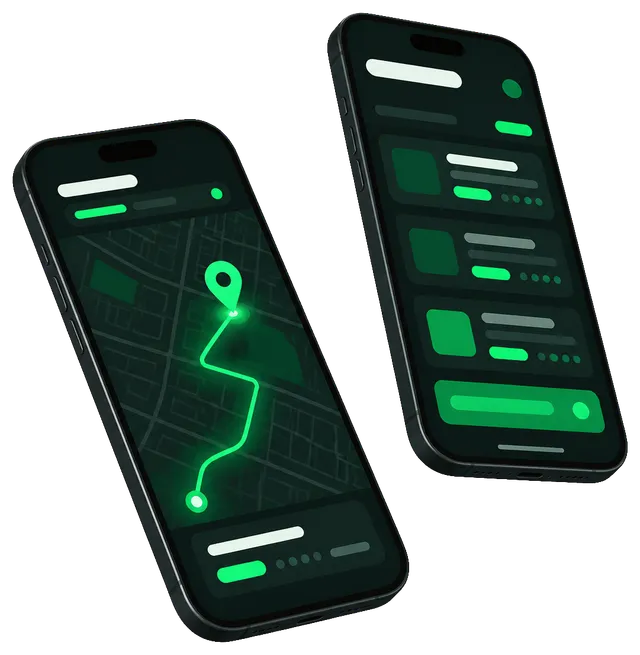
A hands-free mileage logger that detects drives in the background and turns them into IRS-ready deductions, with every GPS point kept on the device.
In development — store listings in progress
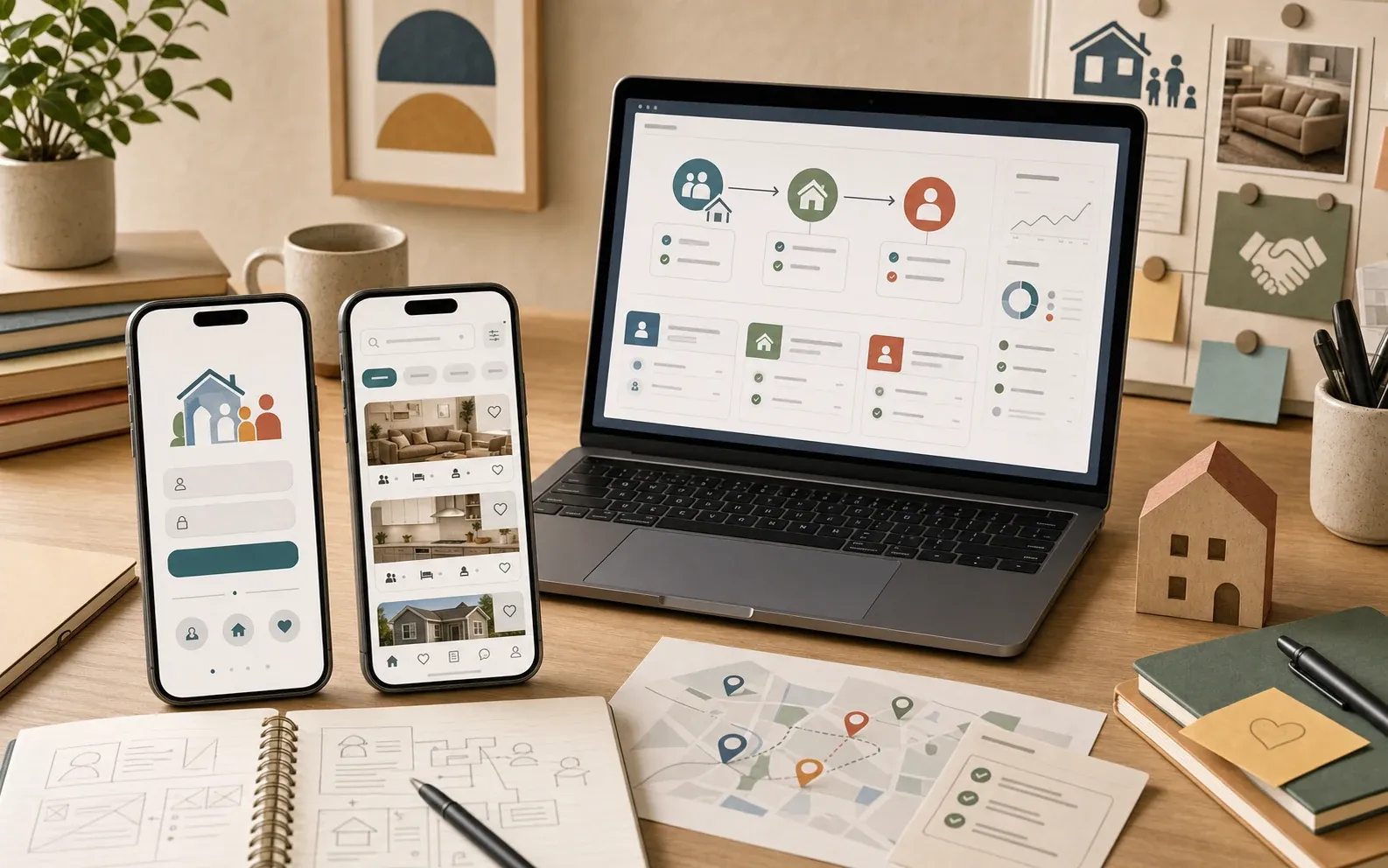
A role-based mobile app helping tenants, property owners, and case handlers coordinate Section 8 housing voucher matches in one workflow.
University team project, Fall 2024 — built with multiple contributors
One team, one codebase, and features land on both platforms at the same time. Fully native is the right call when an app's core is sustained heavy graphics or a platform-only capability — and if that is your product, we will tell you.
No, and nobody honestly can. Review outcomes are the platform's decision. What is controllable is preparation: matching privacy declarations to real behaviour, correct background-mode entitlements, and a working restore-purchases path. Rejections are usually about those, and we handle resubmissions.
It depends on scope, and anyone quoting a number before seeing the scope is guessing. Discovery produces a milestone plan with dates you can hold us to.
Yes. The App Store and Play accounts are yours, so the app stays yours regardless of who maintains it later.
Related
Start with a discovery call. It costs nothing to find out whether this is the right shape of work for your situation.
Prefer email? Contact@DeviceBytes.com