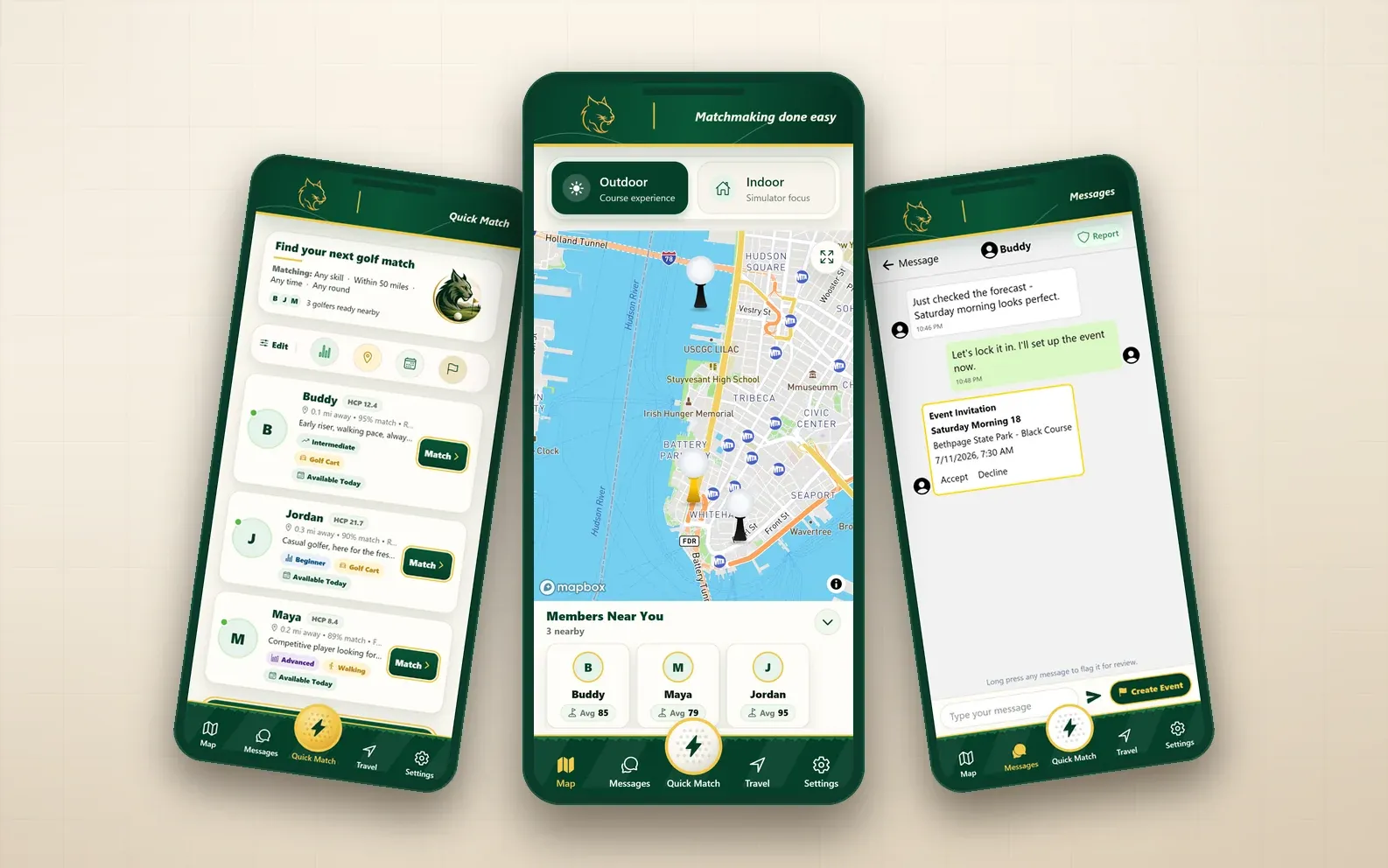
GameLynx
A skill-based matchmaking app that pairs golfers with compatible playing partners nearby, then gets the round on the calendar.
In development — store listings in progress
- React Native
- Expo
- TypeScript
- React 19
- +5 more
Custom software development
One system that matches your real process, instead of four tools and a spreadsheet holding the gaps together.
Most growing businesses do not have a software problem so much as a seams problem. The quoting tool does not talk to the scheduling tool, the scheduling tool does not talk to invoicing, and someone re-types the same job three times a day. Off-the-shelf software assumes a process you do not have, so the workarounds become the process.
We start by mapping the workflow you actually run — including the parts that live in someone's head — then build the smallest system that removes the re-typing. Data model first, because the shape of the data decides what the software can ever do. You get working software early and often, so decisions are argued against something real instead of a document.
Custom software is worth building when the gap between how a product works and how you work has started costing real hours every week. Below that line, a configured off-the-shelf tool is usually the better answer, and we will say so.
The work is founder-led, which means the person mapping your workflow is the person writing the code. Nothing is lost in a handover between a sales conversation and a delivery team, because there is no handover.
From real projects
Each of these is drawn from a case study on this site, not from a hypothetical.
Case studies
A skill-based matchmaking app that pairs golfers with compatible playing partners nearby, then gets the round on the calendar.
In development — store listings in progress
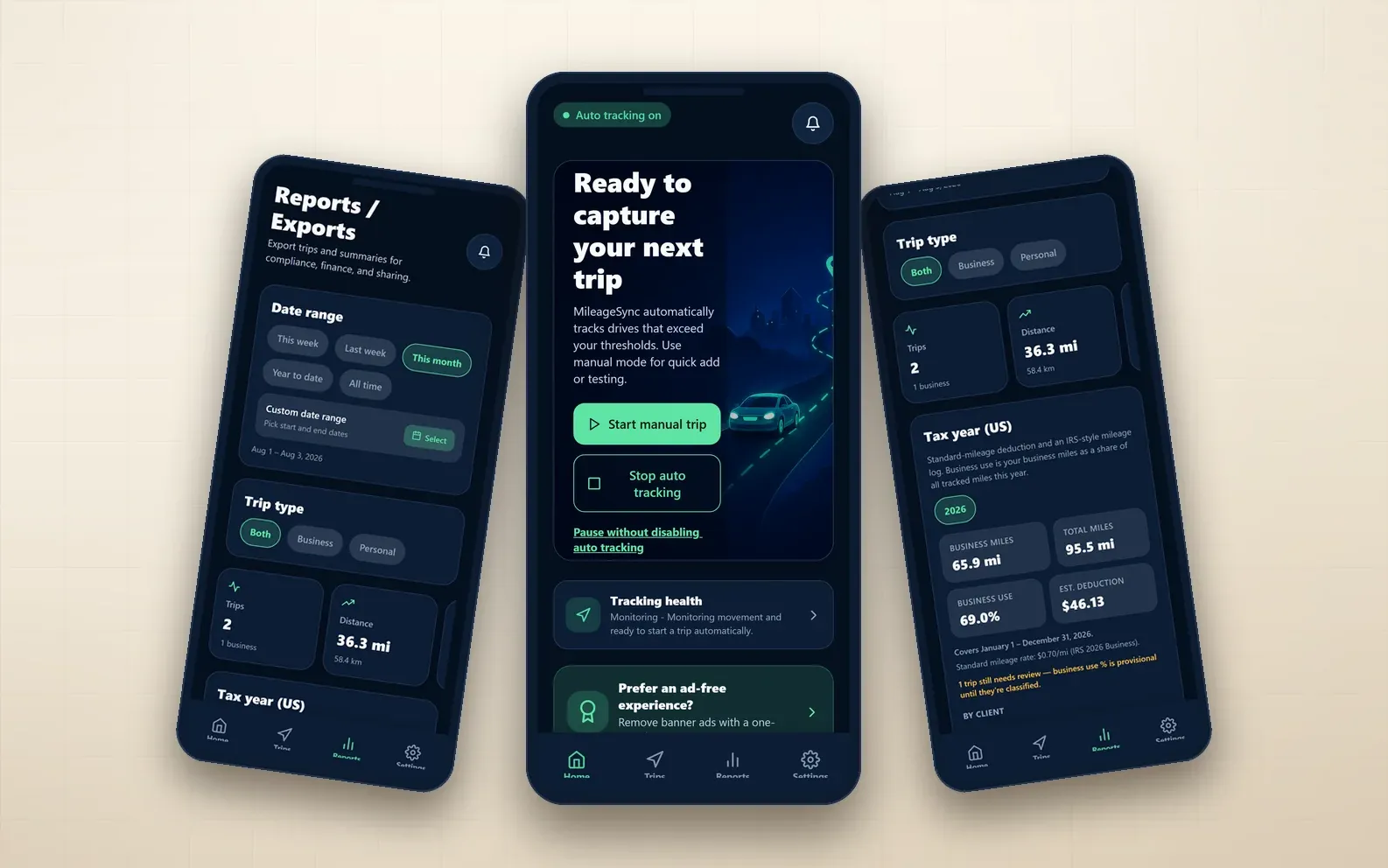
A hands-free mileage logger that detects drives in the background and turns them into IRS-ready deductions, with every GPS point kept on the device.
In development — store listings in progress
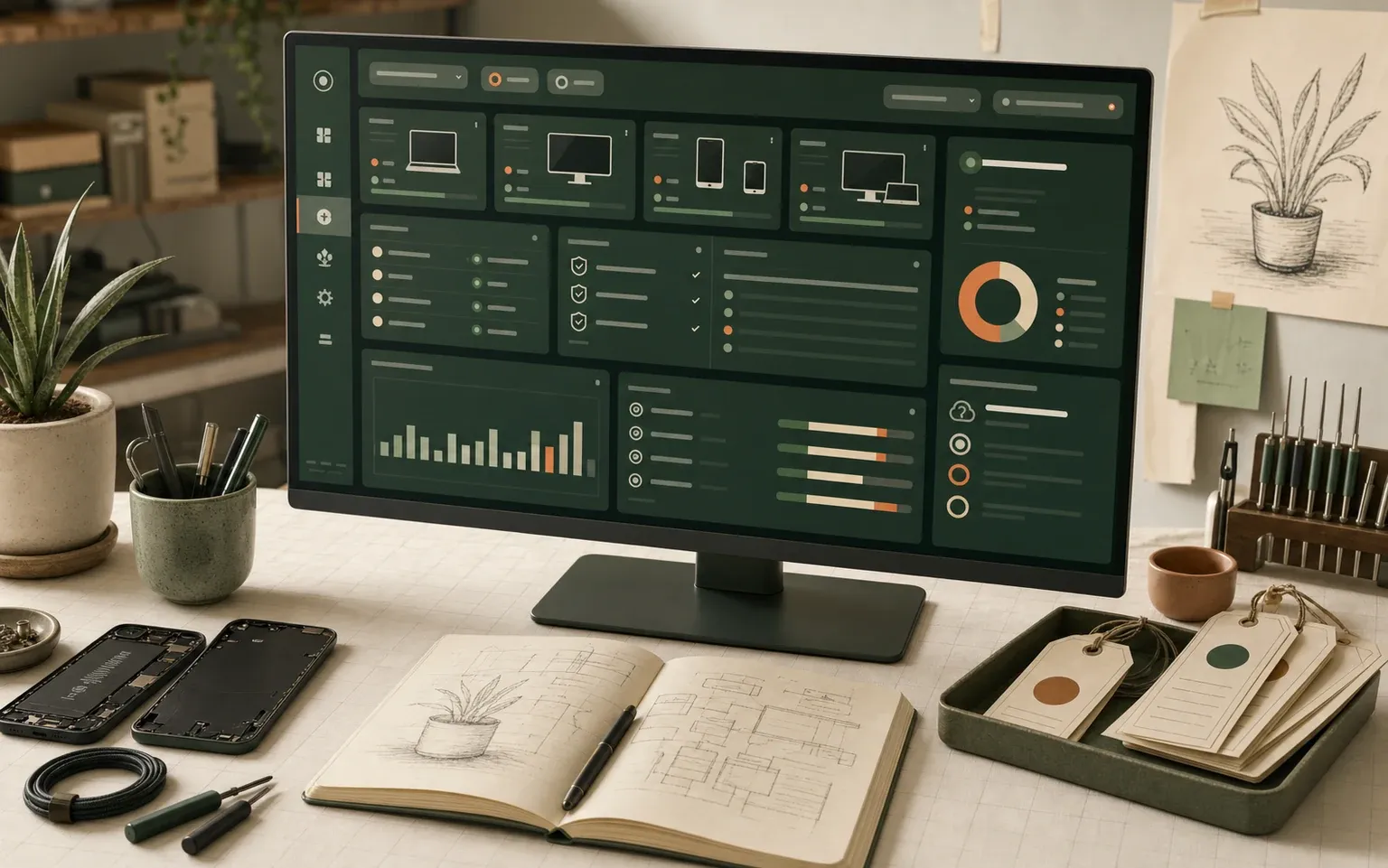
A service-operations dashboard bringing IT assets, vendor contracts, backup checks, and service performance into one view instead of six spreadsheets.
Self-directed concept build — modelled data, not a live client system
A paid discovery sprint first, priced on its own. It produces the workflow map, scope, and a fixed-price build proposal. If the proposal is not right for you, the discovery output is still yours to take elsewhere.
You do. The repository, the cloud accounts, and the domains are all in your name from the first day, not transferred at the end.
That is normal and expected. Ongoing support is a separate arrangement — see support and maintenance.
Usually. If a system has an API or can export data on a schedule, it can be integrated. If it can do neither, that constraint is worth finding during discovery rather than mid-build.
Related
Start with a discovery call. It costs nothing to find out whether this is the right shape of work for your situation.
Prefer email? Contact@DeviceBytes.com